Be yourself; Everyone else is already taken.
— Oscar Wilde.
This is the first post on my new blog. I’m just getting this new blog going, so stay tuned for more. Subscribe below to get notified when I post new updates.
Be yourself; Everyone else is already taken.
— Oscar Wilde.
This is the first post on my new blog. I’m just getting this new blog going, so stay tuned for more. Subscribe below to get notified when I post new updates.
If someone you love is showing signs of dementia, consulting a doctor is very important to know about their condition and how to help them during this difficult time. Not only you will have to learn how to take care of patients as they slowly and gradually lose their touch with reality but you will also have to understand what to expect in future and how things could be in a few years’ time.
Dementia affects the memory of the affected people and makes it tough for them to remember even daily life chores such as changing clothes, eating food and knowing their loved ones. In such cases, coping with the patient often becomes very challenging as they also go through other symptoms and problems that aggravate their situation.
The best thing to do for your loved one in such condition is to approach a doctor. A reliable and professional doctor can provide the best outlook on treatment and how it would work. The doctor will recommend mediation as well as non-drug approaches to help patients in such difficult times.
Medications for treating dementia
Aducanumab-avwa (Aduhelm)
It is the first drug approved by the FDA for treating Alzheimer’s disease in decades. If your loved one is in the early stages of Alzheimer’s disease, the most common form of dementia, the doctor may prescribe this monthly infusion.
It is a monoclonal antibody that reduces the buildup of things called amyloid plaques in your brain. These plaques are part of what leads to the memory loss associated with Alzheimer’s disease. For people suffering from mild cognitive impairment (MCI) or early Alzheimer’s disease, this drug appears to slow down the progression of Alzheimer’s disease.
It is also important to note that not every patient of dementia may react the same way to this medicine and some patients will also report side effects such. The commonly reported side effect of this medication is ARIA, amyloid-related imaging abnormalities that include temporary swelling in the brain and small areas of bleeding.
Cholinesterase inhibitors
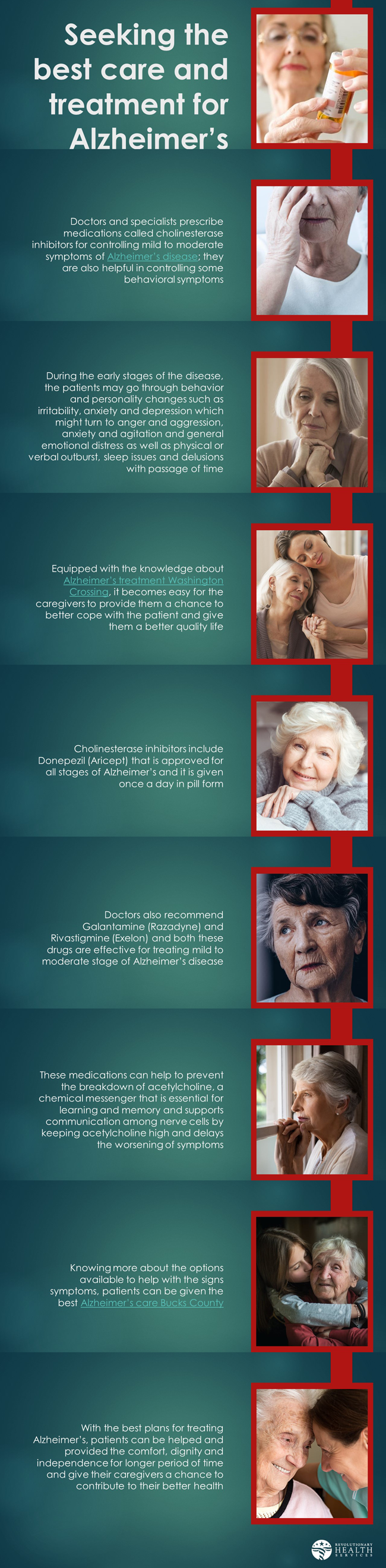
If your loved one is suffering from early stage of Alzheimer’s disease that is not too severe yet, the doctor may recommend a cholinesterase inhibitor. Cholinesterase inhibitors are usually prescribed for any type of dementia as they are believed to prevent a messenger chemical in the brain, known as acetylcholine from breaking down.
Acetylcholine plays a crucial role in learning, memory, and mood. In addition to this, Cholinesterase inhibitors also appear to delay the worsening of Alzheimer’s symptoms. The medicines include Donepezil (Aricept), Galantamine (Razadyne, Razadyne ER, Reminyl) and Rivastigmine (Exelon)
These medications help Alzheimer’s patients by reducing their anxiety, improving motivation and enhancing concentration and memory. Many of the patients can continue with their regular activities if they take cholinesterase inhibitors as recommended by their doctors. It is necessary to understand that these medications do not provide a treatment; they just prevent the worsening of the problem and keep the deterioration away for some time.
Memantine
Doctors recommend memantine (Namenda) for patients suffering from moderate to severe Alzheimer’s. It helps to improve memory, attention, reasoning, and language. It is sometimes prescribed with donepezil (Aricept) to balance glutamate, another messenger chemical involved in our memory and learning.
Studies have shown that memantine can help to deal with delusions, hallucinations, agitation, aggression, and irritability. It also benefits patients with disorientation and make their daily activities easier, delaying the symptoms of dementia to some extent.
Caring for dementia patients is not easy and at times it can prove to be a challenge as the patients might not be so cooperative and resist taking the medications. Some patients have a problem swallowing as they do not understand what to do as their condition deteriorates. In such cases, the care givers will have to play an active role and make sure they either look for a liquid alternative or tablets that dissolve and can be easily administrated to patients.
Managing medications is also an important aspect of looking after a dementia patient. If the patient is in early stage of the disease, they may take the medication on their own but you must keep a close eye to see they take the right medicine at the right time. With dementia treatment Bucks County, you can look forward to knowing more about dementia, how this condition progresses and how to provide the best care and affection to your loved ones and help them at such critical time.
Alzheimer’s is a disease which is caused when abnormal clumps are formed in the brain which are called amyloid plaques or the fiber of the brain is tangled which is termed as neuro fibrillary. This disease was discovered by Alois Alzheimer in 1906 and was named after him. The main cause of Alzheimer’s is the loss of connection between nerve cells in the brain which are called neurons. The work of neuron in the brain is to transmit messages between different parts of the brain to the body including the muscles and the organs of the body. When these neurons die in the hippocampus, which is the part of the brain that is responsible for forming new memories and saving the previous ones its damage is widespread and the brain tissues are shrunken significantly. Another factor on which Alzheimer’s depend is the abnormal build up of protein around the brain
The exact reason why Alzheimer’s happens is unknown, formation of Alzheimer’s depends upon the combination of three factors which can be genetic, life style and environmental factors. These factors go effecting the brain over time and are said to be the main cause of Alzheimer’s. Another factor on which the formation of Alzheimer’s depends is stress. Stress can form inflammation in the brain which can lead to bigger problems such as dementia. Dementia can lead to Alzheimer’s and many other related forms of diseases.
This is a disease which has no cure however, with medical treatments you will only be able to slow down the whole process otherwise there is no cure for Alzheimer’s. But with the help of medicines one is able to keep the symptoms from getting worse for a period of time. When a person suffers from Alzheimer’s he loses his ability to carry out daily activities such as eating or bathing. Alzheimer’s is spread within the time span of several years and its symptoms come out in many different stages. The stages of Alzheimer’s are:
• The first stage occurs even before the appearance of any symptoms this stage is known as the very initial stage of Alzheimer’s and is not that harmful for the patient of Alzheimer’s.
• The second stage shows the symptoms of little forgetfulness. The patient might keep his things wrongly and may forget places where he kept his things, this stage is rather hard to identify by the doctors or the loved ones but if diagnosed then getting the treatment started will help in slowing down the progression of the disease.
• The third stage of Alzheimer’s is the one where the symptoms might get Noticeable. It will get hard for the patient to remember his daily basis stuff, most common symptoms of this stage includes retrieving a name or word, denial of everything said to them and find it difficult to remember plans.
• The fourth stage of Alzheimer’ is more than just memory loss. They tend to be confused in different languages, it gets hard for them to be able to organize their things, and calculations are like an impossible task for them. You can say that performing daily tasks seems like a very difficult job for them.
• The fifth stage of Alzheimer’s includes emotional changes with the person suffering from Alzheimer’s, he will go through a phase where he might get hallucinations or paranoia. At this stage a person feels hatred towards his loved ones and feel as if everyone is against them. This stage also includes of forgetting simple details such as phone numbers or house addresses.
•The sixth stage is the one where the patient might not even recognize their loved ones, they may remember your face but will not be able to call you by your name or know what reaction you have with them. At this stage you will need to take good care of your patient as this is the stage where they would need to be looked all the time with a good patience level.
•The seventh stage is known as the last stage of Alzheimer’s which is the one where you will either yourself would need to look after your patient or will ask for a care taker to look after them as at this stage they won’t be able to perform the most basic daily routine tasks such as eating, bathing or even sitting. Sometimes the patient is unable to even speak.
These are the seven stages of Alzheimer’s and if you think that any of your loved ones are going through this disease then for knowing which stage they are on you should visit a specialized healthcare center and get done with quick Alzheimer’s tests Yardley. You never know, if caught and detected at an early stage, you might be able to help someone set a path towards recovery instead of decline.
In 1906 when a woman died due to a mental illness where she was diagnosed as behaving in an unusual manner, had a very unpredictable behaviour. She had language problems and used to forget things, people found it very unusual and used to say that she has gone crazy. After her death a doctor named Alois Alzheimer after examining her brain tissues noticed abnormal clumps in her brain which are now called amyloid plaques. He also found tangled bundles of fibre that are now known as neuro fibrillary. This way he discovered this new disease which is named after him and is called Alzheimer’s.
Later it was further discovered that another feature is the loss of connection between nerve cells in the brain, which are called neurons. Neurons of the brain transmit messages between different parts of the brain to the body including the muscles and the organs of the body creating variations of this disease.
Alzheimer’s is basically a disease which is irreversible and progressive brain disorder which can easily and slowly destroy memory and thinking skills, eventually leading to losing the ability to carry out even the simplest of tasks.
When the neurons begin to die initially in the hippocampus, the part of the brain essential in forming memories, additional part of the brain is affected and by the final stage of Alzheimer’s, damage is widespread leaving the brain tissues significantly ‘shrunken’. The main cause of Alzheimer’s depends upon a combination of genetic, life style and environmental factors. These three factors are the main reasons that can cause Alzheimer’s when combined together and can affect the brain over the time.
Another factor that counts as a cause is the abnormal build-up of protein in and around the brain cells.
Stress is another cause which can build up Alzheimer’s as it can cause inflammation in the brain, making it more susceptible to health problems such as dementia which can lead to Alzheimer’s or other related form of diseases.
In most of the cases, the very initial symptoms appear during the age of sixties and in most rare cases it occurs early between a person’s thirties and mid-sixties but this is very rare as the common age of Alzheimer’s is around sixties. It is estimated that there are more than 44 million people around that world who are living with Alzheimer’s at the moment. It is observed that mostly the middle stage Alzheimer’s is the most long lasted stage and it can last for many years and as the disease progresses the patient of Alzheimer’s will require a greater level of care.
A person with severe Alzheimer’s disease has a high chance of dying from pneumonia. Making pneumonia the most common cause of death in people with Alzheimer’s. It occurs because of the loss of ability to swallow, since when a person has high stage of Alzheimer’s his brain stops following the right commands and the food and drinks can enter lungs and can cause infection. Therefore, such people require special care for Alzheimer’s disease Yardley at the best place possible, usually a rehabilitation centre with experts and proper medical and professional treatment options. The medical practitioners will provide your patient with best care every possible facility that a patient suffering from Alzheimer’s can be in need of.
Dementia is an umbrella term used for describing several symptoms of cognitive decline, such as memory loss. Dementia is a symptom itself for various brain disorders and underlying diseases.
Let’s talk about dementia in detail here.
As mentioned above, dementia is a collective term for various medical conditions, such as Alzheimer’s disease. When there are abnormal brain changes, there is a decline in cognitive abilities that may hinder a person’s daily routine. These changes may be severe enough to interfere with behavior, relationships, and feelings. All of these come under the term ‘dementia.’
Dementia is a progressive disease, which means that symptoms may be subtle at first and then get worse over time. Here are a few symptoms of dementia that the patient themselves or their caregiver may notice.
As the age of the person progresses, these symptoms may get worse.
Dementia is usually caused due to damaged brain cells. When brain cells become damaged, they are unable to communicate with each other effectively. When there is a loss of communication between brain cells, thinking, feelings, behavior, etc. are affected.
While brain changes that result in dementia are permanent, memory and thinking problems caused by these conditions may get better when the condition is improved:
In this article, we discussed what dementia is, what its symptoms are, and what its causes are.
In case you’re looking for Dementia Cure New Hope, PA, we highly recommend getting in touch with RHS Live Well.
According to research, one in every seven Americans might be at risk of getting Alzheimer’s. It’s why health experts and doctors advise early testing and recommend watching over brain function. This can be done with Alzheimer’s care programs which help people detect dementia and introduce treatment plans.
If you have a loved one who might have memory loss or showing symptoms of the disease, then it’s a good idea to look for an Alzheimer’s care program.
Here are a few tips that can help you find a suitable one.
Do All Your Research and Background Checks
You want your family member or loved one to get the best care and by doing your research you will be able to help them get it. Find out whether or not the people running the program or place have all their practice licenses and are experienced in dealing with Alzheimer’s patients. By doing a background check, you are not just believing what is written or advertised but actually making sure that it’s true.
Most Alzheimer’s care programs are designed by licensed and credited professionals, and also specialize in memory loss and dementia. If you look through Alzheimer’s Care Bucks County, you will find programs specifically created to help patients manage their condition and even reverse the effects of memory loss.
Ask for Reviews
It is always a good idea to ask two or three people about an Alzheimer’s care program. This way you find about the treatment plans, people working with these programs and facilities, and success rates. It can also help you make an informed decision about choosing a treatment plan for your loved one. While getting a review from a patient or there family will not be easy, you can check websites and forums or look through social media as well.
Find out the Staff Qualifications
Now, you might find this slightly challenging but it will only help you find the right Alzheimer’s care program. Many programs or facilities will have different certifications of their staff listed on the web pages. You can ask about them or book a visit and meet the staff responsible for dealing with your patient. By checking their qualifications, you are making sure that everything is in good hands and the treatment plan will result in improvement.
Check the Treatments in the Program
Now, it is already known that Alzheimer’s disease does not have a cure as yet. While researchers and doctors are working on finding it, there have been a few developments in treating the stages of this illness. Doctors and health experts have found that when someone begins to show symptoms in the beginning of losing brain function and memory, they m ay be able to treat it. However, catching Alzheimer’s in the early stages is rare but not impossible. There are programs offering treatments to patients but you must all the procedures out before choosing one. It is important that you understand what technique or processes will be a part of the Alzheimer’s care programs.
Hopefully, these tips can help you choose the right Alzheimer’s care program for your loved one or family. Those who are in the area can search for Alzheimer’s Care Newtown, PA and get treatment plans made accordingly.
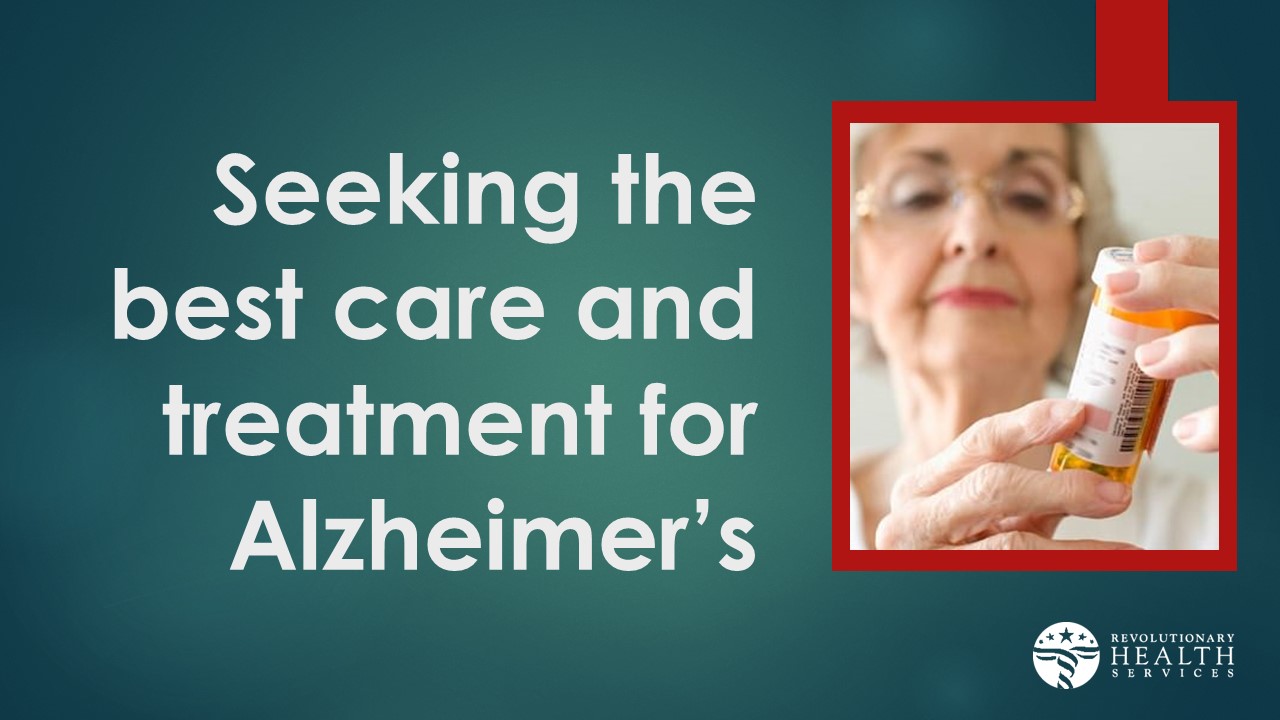
It is important to know there is no set treatment or cure for Alzheimer’s disease or medication to slow or stop its progress. However, there are drugs as well as non-drug options that can help the patients and caregivers with symptoms and help to deal with this condition most effectively.
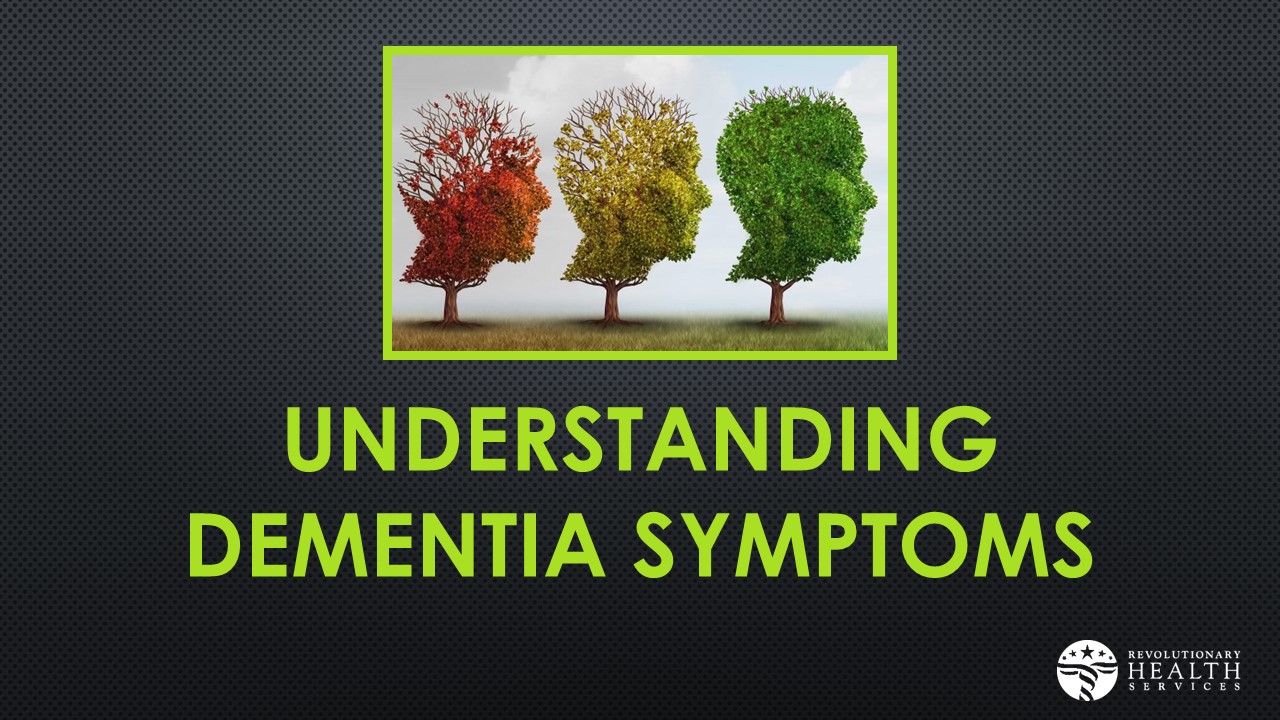
Dementia is a group of diseases characterized by cognitive decline. Contrary to popular belief, dementia is not a condition of old age.
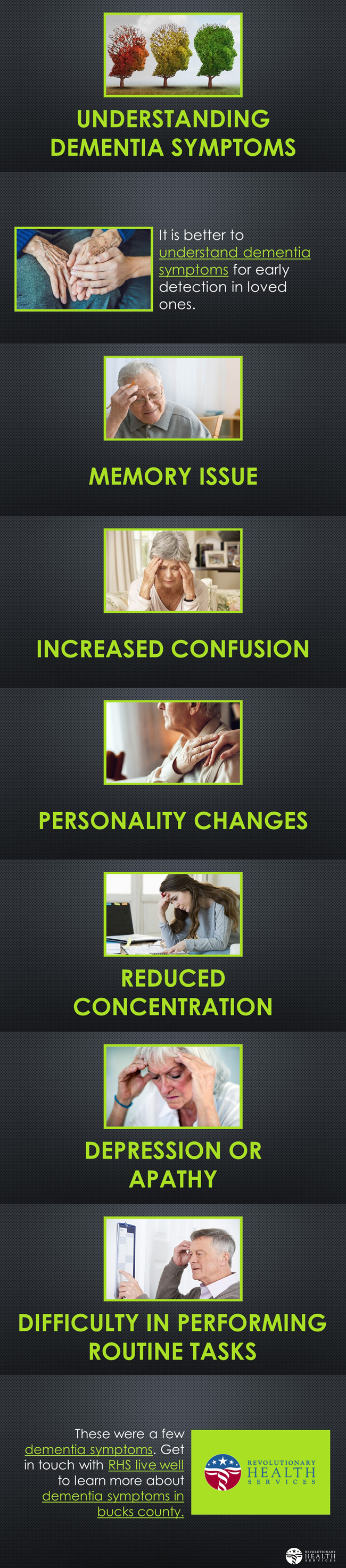
It is better to understand dementia symptoms for early detection in loved ones.
Here are a few dementia symptoms:
These were a few dementia symptoms. Get in touch with RHS Live Well to learn more about dementia symptoms in Bucks County.
Dementia is a group of diseases characterized by cognitive decline. It is indeed a painful condition to go through and patients require continuous care and attention.
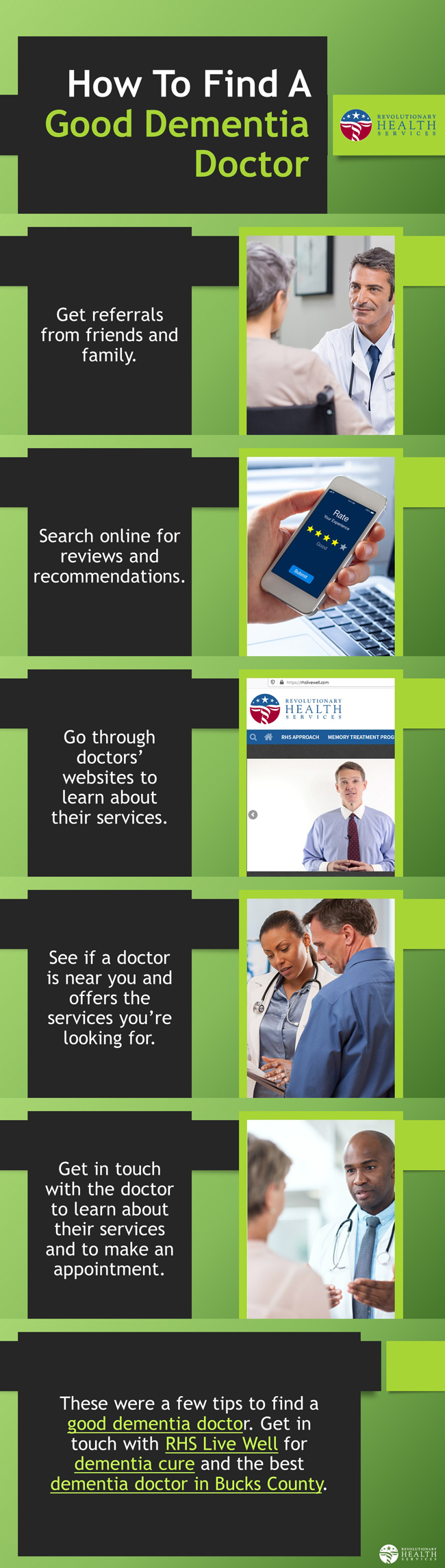
For better management, it is important that a good dementia doctor is sought. Here are a few tips to find one.
These were a few tips to find a good dementia doctor. Get in touch with RHS Live Well for dementia cure and the best dementia doctor in Bucks County
Cognitive decline begins very subtly but it progress to such a degree that it begins to affect the individual’s quality of life. It is necessary to understand the various cognitive disorders and their causes to slow it down and know about the relevant treatment options.

It is important to understand that most types of dementia Symptoms cannot be cured as no specific treatment has been discovered till yet but there are ways to manage the symptoms and the doctors can recommend them depending on the patient’s condition.


 Primary Care Physician Bucks County, PA