Dr. Whitney explains why protecting yourself from COVID-19 could also reduce your risk of chronic diseases like dementia, heart attacks/strokes, and even cancer!
Dr. Whitney explains why protecting yourself from COVID-19 could also reduce your risk of chronic diseases like dementia, heart attacks/strokes, and even cancer!
This week Dr. Whitney interviews a patient of his who spent time in the ICU with COVID 19. Experience his journey of uncertainty, isolation, and recovery. His wife describes a helpless feeling of a loved one going through this crisis.
| Dr. Whitney interviews a patient of his who spent time in the ICU with COVID 19. Experience his journey of uncertainty, isolation, and recovery. His wife describes a helpless feeling of a loved one going through this crisis. |

Dementia is a collection of symptoms caused by disorder affecting the brain tissues. As brain is the part of the body that controls everything, dementia results in a series of symptoms. Most common symptoms observed in a patient of dementia are described below. It can affect how you think, behave and/or carryout everyday tasks. It affects the functioning ability of the brain in a way that one finds it hard to memorize or remember a thing; minor stuff like buttoning up the shirt become a serious hassle.
Dementia can be divided according to the root cause of the disease, but all of them lead to neurological defect in the brain cells resulting into a wide variety of symptoms. Depending on the cause dementia can be categorized into the following:
In the early stage of the disease signs and symptoms may not be obvious and it is difficult to diagnose. As the disease advances some clear signs and symptoms make it easier to diagnose the disease and conform by some investigations. Most common signs and symptoms are as follows.
Treatment of dementia in Newtown PA includes medications and properly guided care of the patient. These patients need some spatial care and help to live. At this point it should be expressed that treatment of dementia in Newtown PA includes providing skilled and experienced workers team. The facility team assesses the root cause of the disease and delivers preventive care program which helps the patient suffering from dementia live longer and healthier.
This is a complete subject to describe how to properly care for a dementia patient. In short they need assistance to carry out their work of daily routine. They need care and assistance for changing cloths as their motor function deteriorates by the disease. They need assistance in bathing. They need assistance in eating, sitting or walking. They require proper exercises which help them to maintain their mental and physical health. They are assisted to keep social activities and spending time to live a healthy life. In very advanced conditions they need proper nursing care to prevent diseases and health problems. The cure or progress of the disease is not known yet medically but the aim of management is to keep the patient of dementia healthy and try to provide him a comfortable, healthier and better life during this period. Well trained and skilled persons are hired for this type of work and care in order to prevent any injuries, discomfort or damage. Patients with dementia are usually of old age and prone to infections and diseases. Therefore, their care management also includes prevention from these types of infectious diseases such as pneumonia or other respiratory tract diseases.
Dementia is a progressive cognitive decline that can affect the brain to the extent of non-functionality. Most people suffer from Alzheimer’s disease as a part of genetic inheritance while some self-inflict it on them by keeping a very terrible lifestyle. Consuming unhealthy food such as too greasy, non-healthy things or excessive consumption of alcohol and drugs along with a routine comprising of no to very minimal exercise. This cognitive decline can begin in some people as soon as 40 years however, it may begin to show signs and symptoms in a person during their old age when reversing the disease becomes close to impossible. So it is always best to visit a health care service provider such as Revolutionary Health Services and start early dementia treatment Newtown PA, to effectively reverse the disease in time.
Here are 5 common signs to look out for in a person developing Alzheimer’s disease.

Alzheimer’s disease is a kind of molecular cancer that develops and then harbors inside a person’s brain causing innumerable degenerative disorders. Some common signs of Alzheimer’s include forgetting the simplest things such as names, places, days and dates. Similarly, performing of simplest tasks such as how to wear clothes, place things to their right place et cetera become a serious kind of trouble for the Alzheimer’s patient. This disease if not stopped or reversed in time can lead to the death of the person suffering from it. So if you sense someone you know showing signs and symptoms mentioned earlier and similar, then the best thing to do for them is take them to a healthcare provider for proper test for Alzheimer’s dementia Newtown PA, in order to detect if the disease is really there so that it can be stopped from causing any further damage through effective treatment.
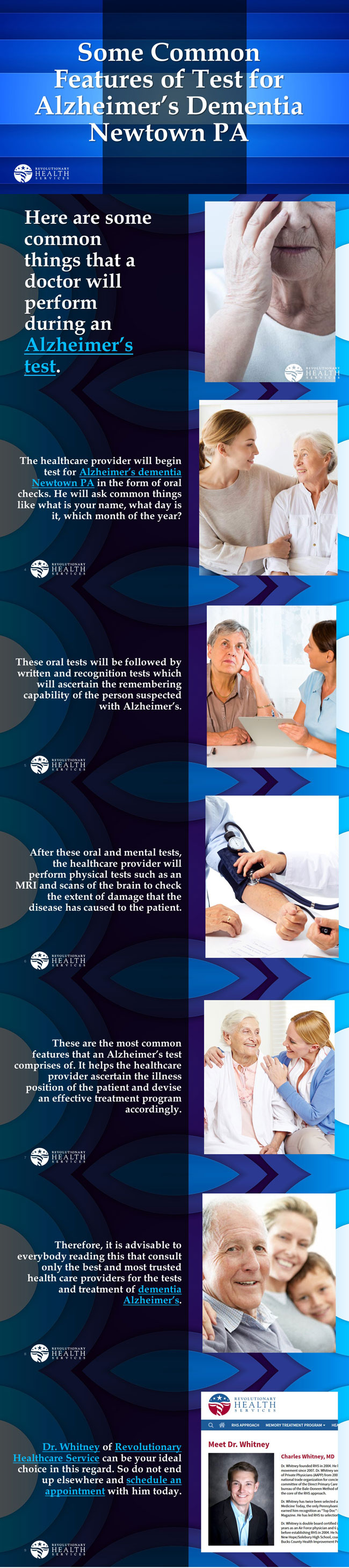
Here are some common things that a doctor will perform during an Alzheimer’s test.
Finding useful and relaxing activities for people suffering from Alzheimer’s disease and dementia can be challenging. There are programs which have daily activities planned for patients so that they are able to manage their conditions and help them improve.
For dementia and Alzheimer’s care, the activities need to be planned carefully and should be able to bring the people back a little towards normal life.
If you are looking to for activities to include in a care program for dementia patients, then here are a few to get you started.
Light and Easy Exercises
It is very important for dementia patients to keep physically active. By planning activities around light exercises such as walking, hand and foot movements and even stretching, you can help them maintain a healthy routine. Depending on the fitness of the patient, there can also be water aerobics or fishing trips on some days.
These physical activities are not designed for fitness but can also be good for reducing anxiety and restlessness in dementia patients. There are many programs like those run by Dementia Care Bucks County for example, that have such activities for their patients.
Arts, Crafts and Creative Work
Now, this may sound like something that wouldn’t be suitable for a patient losing brain function and suffering from memory loss, but it really is. Activities that involve arts and crafts or other creative things like making models with clay or putting together necklaces and bracelets with beads are actually very positive. Arts and crafts are done usually in groups and can help people feel like they are part of something. This creates a better mood and increases productivity as well.
Small Trips or Outings
Going out, even if it’s for a short amount of time can work very well in improving the condition of dementia patients. You can plan small trips to nearby parks, to a community event or go to the zoo as well. This could help the patients remember a few things again and feel normal. These outings or trips could be planned on a weekly basis or you can have them two to three times in a month. It is a good way to keep dementia patients busy so that they don’t get depressed or upset.
Musical Groups
Now, there are already many reports on the calming and positive effects of music. For Alzheimer’s and dementia patients, musical activities such as listening to relaxing music in groups or watching concerts together can be really helpful. They not only bring memories and emotions back but are also good with making patients move their legs or hands.
Communicate and Engage
Dementia and Alzheimer’s patients have a lot of problems with communication and talking to others. If you start to engage with them regularly with activities like reading or showing pictures and playing board games, you will begin to see improvements. There are care programs that have activities created around engaging and communicating with patients. You can also look through Dementia Cure Newtown, PA to find many facilities and health services that create specific activities according to the condition of the patient.
Hopefully, this has given you a few ideas in coming up with activities for dementia patients. Just remember that it should be helpful and not perfect!
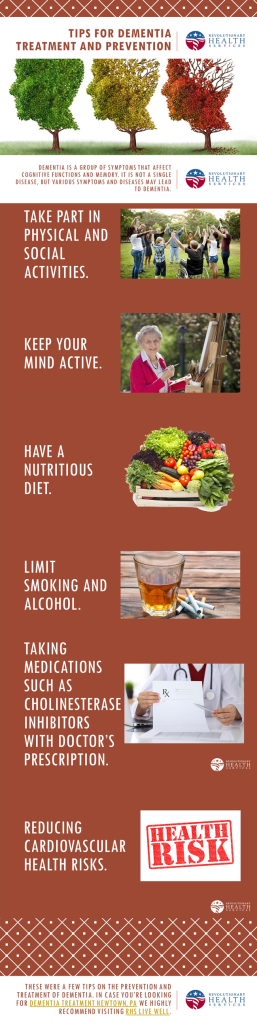
Dementia is a group of symptoms that affect cognitive functions and memory. It is not a single disease, but various symptoms and diseases may lead to dementia.
Here, we talk about the prevention and treatment of dementia:
These were a few tips on the prevention and treatment of dementia. In case you’re looking for dementia treatment Newtown, PA we highly recommend visiting RHS Live Well.
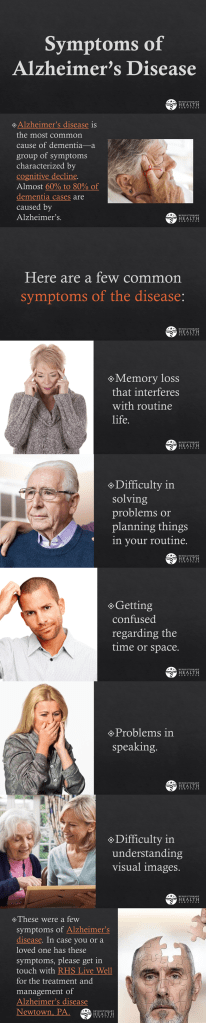
Alzheimer’s disease is the most common cause of dementia—a group of symptoms characterized by cognitive decline. Almost 60% to 80% of dementia cases are caused by Alzheimer’s.
Here are a few common symptoms of the disease:
These were a few symptoms of Alzheimer’s disease. In case you or a loved one has these symptoms, please get in touch with RHS Live Well for the treatment and management of Alzheimer’s disease Newtown, PA.

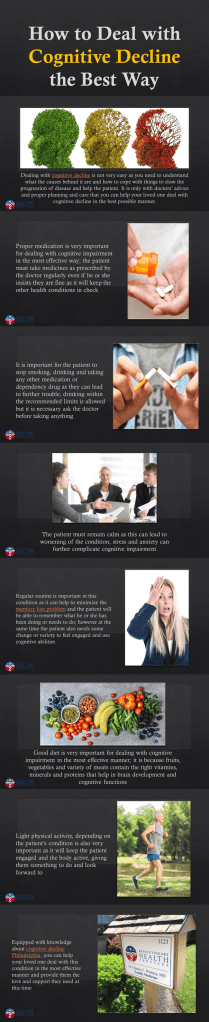
Dealing with cognitive decline is not very easy as you need to understand what the causes behind it are and how to cope with things to slow the progression of disease and help the patient. It is only with doctors’ advice and proper planning and care that you can help your loved one deal with cognitive decline in the best possible manner.
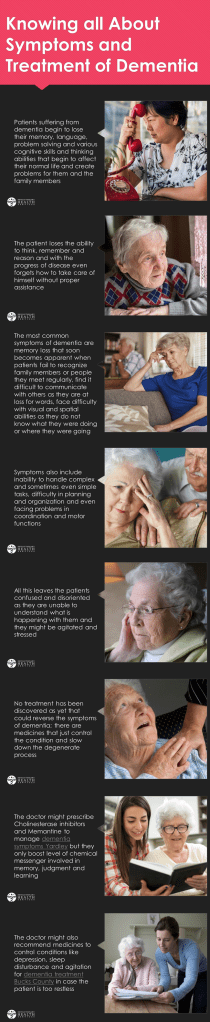
Dementia is the collective term used for loss of memory, language, problem solving and other cognitive abilities that begin to interfere with a person’s daily life routine. While the most common cause of dementia is Alzheimer’s disease, it can also be a result of some injury, HIV or some brain disorder.

 Primary Care Physician Bucks County, PA