Moderate Stage Alzheimer’s – How to Deal with it

Alzheimer’s is a disease associated with slow and steady decline of the memory and mental abilities due to damage in the brain. Unfortunately, this condition is irreversible which means that it cannot be treated and the symptoms keep on increasing and worsening with the passage of time. The patient will go through a range of symptoms over a period of time and while the timing and severity of these symptoms might differ, there is no way that these symptoms could be avoided or prevented once the patient is diagnosed with the disease. The patients will experience the certain symptoms once the disease begins to progress.

To make the diagnosis and care for disease easy for doctors and caregivers, Alzheimer’s has been grouped into three different stags according to the symptoms the patients experience during the phases. These stages are mild or early, moderate or middle and severe or late. The patient can experience any number of symptoms that mark each stage. If a symptom has been diagnosed in a patient, it will continue to increase with time but it has also been observed that sometimes symptoms also disappear in later stages of the disease.

Another significant thing to know about stages of Alzheimer’s is that the moderate stage tends to be the longest and the patient might remain in the moderate stage for years before his or her condition begins to deteriorate. During the moderate stage, the patient will experience all the symptoms that were present in the mild stage but these symptoms will become severe and the patient will be facing more mental and physical decline.

Taking care of Alzheimer’s patient during moderate stage

As this is the longest stage of this disease, it can last for years and this increases the patient’s need for care along with proper management of medication and daily routine. As the disease continues, the patient’s symptoms will become more pronounced, confusion will increase, frustration and angry behavior or outbursts will increase and the patient will begin to act in different ways that might become difficult to handle such as refusing to bath, eat or change.

Due to the damage in nerve cells of the brain, the patient will find it very difficult to express thoughts and carry out routine tasks that increase the caregiver’s responsibilities. It is necessary for the caregiver to learn how to care for such a patient as it needs a lot of handwork, patience and support to look after and care for such a patient who does not know what is happening, why such mental or emotional changes are taking place and why are he or she is no longer able to remember or do things on their own.

  • The patient will become more forgetful and feel confused and lost
  • The patient will be disoriented and lose track of day and time
  • The patient will have to be reminded to eat, bathe, groom and use the bathroom; some patients might have problems in controlling their bladder and bowels too
  • The patients might experience hallucinations and delusions that can lead to aggression or paranoia
  • The patient might have difficult speaking and forget words
  • There will be sleep disturbances
  • There will be mood swings including depression, anxiety, anger, confusion and frustration
  • There will be repetitive behavior and with passage of time it will increase and often become hard to control

Caregivers also need to understand that even during the middle stage of the disease; the patient can participate in daily activities with assistance and proper routine setup. With help of doctors, it can be determined what the patient can do and find ways to simplify the tasks to make it easy for them to be a part of their life and control what they can do. However, this will not be easy at all and the caregiver will also need support to deal with things and offer the best care and loving environment to the patient.

Dealing with moderate Alzheimer’s Washington Crossing is not very easy and the caregiver must have a clear idea of what to expect during this stage to be prepared to handle things the best way. It is necessary that the caregiver remains composed and uses a calm voice when responding to repetitive questions, confusion, anger or anxiety to help the patients remain calm and assure them that they are in safe hands. It is important that patients get an emotional response from the caregiver so that they can be soothed and feel loved. The caregiver should learn as much as they can about Alzheimer’s Treatment Yardley so that they can work along with the medical experts to help patients and provide the best care and quality life that they deserve.

Learning to Deal with Cognitive Problems Most Effectively

Cognitive disorders or cognitive problems begin very subtly, there are no apparent signs or symptoms and in most of the cases, it is too late before they are diagnosed and the problem has already progressed to a higher level. These cognitive disorders not only affect the quality of the patient’s life but also affect the family members and loved ones one way or another. It is important for family members to keep a close eye on their loved one, especially as they age to see how well they are doing and if their brain functions are showing any signs of abnormality.

With early diagnosis and proper care, it is possible to slow down the process of brain degeneration that is the main cause of cognitive decline and disorder. There are a number of factors that lead to cognitive disorders. Hormonal imbalances in the womb, genetic predisposition and environmental factors are a few. Lack of proper nutrition and interaction during vulnerable stages of cognitive development especially the growing up years are said to be the main causes of cognitive disorders.  Sometimes, substance abuse and physical injury can also lead to cognitive disorders in case the part of the brain that determines cognitive functioning is damaged either due to excessive use of drugs or trauma.

Types of cognitive disorder

Cognitive disorders are a part of the neurocognitive disorders that are defined as any disorder that significantly impairs the cognitive function of an individual to a point where normal functioning in a society becomes impossible with proper treatment.

Some of the most commonly known cognitive disorders are:

  • Dementia
  • Developmental disorders
  • Motor skills disorders
  • Amnesia
  • Cognitive impairment

Research shows that Alzheimer’s disease is one of the most common cognitive disorders that affect more than 5.1 million American every year.

How to detect cognitive disorder

The signs and symptoms of cognitive disorders vary but the most common ones are easy to detect. They include:

  • Confusion
  • Poor motor coordination
  • Loss of long and short term memory
  • Identity confusion
  • Impaired judgement
  • Cognitive decline with passage of time

With the passage of time, the severity of cognitive disorders progresses which often make it difficult for patients and the caregivers to cope with things. Cognitive disorder begins with the patient showing very minor signs of forgetfulness; the patient will forget the names of people they knew well or forget what they did recently. In the beginning, it would seem like routine incidents of forgetfulness but as the disease progresses, the patient’s memory becomes persistently impaired and they live in a state of confusion.

It becomes necessary for the caregiver to understand what the patient is going through and provide them love and care that they need at this time. Having the right information regarding cognitive decline, cognitive impairment and dementia can help immensely in dealing with these conditions as the patients often become emotional, stressed and confused which makes it tough for others to help them. However, there have also been cases where the patient withdrew into themselves and did not show any emotions or feelings at all.  It is up to the caregiver to see what the patient is going through and deal with them in the most capable manner, offering them all the support and love they need at this time.

Treatment for cognitive disorders

Doctors mostly prescribe antidepressants and medicines that prevent further decline in the condition as there is no drug to treat cognitive disorders. There are supplements and therapies that help to reduce memory loss and improve cognitive function to deal with depression and anxiety.  These medicines help to extend the awareness of the patient, slow down the degenerative process and improve the quality of life.  

It is important to consult a doctor or a specialist and get the best medical care as soon as the patient shows signs of cognitive decline Philadelphia as this is the only way to prevent the severity of problem. After assessing the initial signs of dementia Yardley, the doctor can prescribe the right medication and therapy that will make it easy for the patient and the caregiver to adjust with the situation and live a better quality life.

How to Detect Dementia with Subtle Signs – Top 5 Symptoms

Dementia is a specific term used for various diseases and conditions that are characterized by a decline in memory, language, problem solving and other critical skills that affect one’s ability to perform routine activities. The most common problems that people face in dementia is loss of memory and Alzheimer’s is believed to be the most common cause of dementia. The most obvious symptoms of dementia include impairment in thoughts, communication and memory and with the passage of time, patient begins to deteriorate to an extent that he or she even forgets their name.

In most of the cases, detecting Dementia Symptoms becomes very tough because the caregivers fail to realize if it is dementia or some other problem. A patient will need to have at least two types of impairment that interfere with everyday routine to be diagnosed with dementia. The sad thing about this is that even the patients do not seem to realize what is happening to them and try to remember details and people with whom they are living or interacting with on daily basis but this becomes difficult with passage of time.

If your loved one is facing some problems relating to memory, communication or focus, it is important that you watch out carefully as these might be the subtle signs of dementia. You might not be able to prevent dementia as no medicine or cure has been invented or discovered as yet but you might be able to slow down the process with proper care and therapy and even supportive medicines.

Discussed here are top subtle symptoms that you need to watch out for to detect dementia at an early stage:

Slow deterioration of memory

You might notice that your loved one is having trouble with memory more than often. This deterioration is slow but noticeable and tends to involve short term memory. The patient might be able to remember events that took place years ago but does not remember what he did in the morning. Other symptoms of slowing deteriorating memory include forgetting where they kept their keys or mobile, what they did a short while ago and what were they doing a few hours or minutes ago. If you notice this happening more than once, it is time to consult a doctor.

Communication problems

Another subtle symptom of dementia is patients’ inability to convey what he or she is feeling and share it with others. A person suffering from dementia might be unable to come up with the right words to express what he or she wants to say. People at early stages of dementia find it hard to hold proper conversation as they keep on forgetting what they want to say and what words to use to express their thoughts.

Frequent mood swings

Patients on the verge of dementia often face mood swings and they tend to occur at shorter intervals as the condition deteriorates. The patient might suffer from depression, shift in personality and inability to make proper judgements. A person who was shy his or her entire life might become very outgoing and vocal; the main reason being that judgment is affected in this condition which leads to mood swings.

Inability to act normally

The patient will find it difficult to complete even the normal tasks such as remembering how to manage finances, playing games or understanding rules and regulations that was not so difficult in the past. This might be the onset of dementia and with passage of time even familiar tasks like taking a shower and changing clothes will become tough and the patient will find it difficult to learn new things or follow new routines.

Confusion and inability to comprehend

The patient might become confused and not know what they need to do and how. This results from lapse in memory, thinking or judgment and the patient no longer remember faces, right words or understand what is going on around them. Confusion is often a result of not only what they were doing a few minutes ago, remembering someone they have met before or just by feeling lost and depressed. This leads to inability to comprehend and the patients need attention and care as they are no longer able to fend for themselves.

People in early stages of dementia find it tough to cope with things as they are afraid of the changes going inside them. They will try to pretend that everything is fine and they are just not feeling well due to any reason. However, it is up to the family members to notice even these subtle symptoms and get medical assistance.  Knowing about the initial signs of dementia Bucks County, you have a chance to seek appropriate medical help for the patient and give them better quality life in the long run.

Knowing All about Alzheimer’s Effective Treatment and Management

If your parents or a loved one is suffering from Alzheimer’s disease, it is important to have all the information you can get regarding this condition to help them deal with it most effectively and offer the best care and support at this time. There is medication to offer relief as well as effective management to improve the patient’s quality of life. Here you will know all about Alzheimer’s Treatment Newtown, PA.

  • The general idea about Alzheimer’s is that this disease cannot be treated; while it is true that no proper medication has been invented that can help to do away with the disease, yet there are medications that help to treat symptoms and delay the onset of disease
  • It is important to know that these medications do not work for everyone; each patient is different with individual brain functioning and might not respond to the drug in the same way but still there is hope for people and it can help to control the symptoms
  • There are four drugs that have been approved by the FDA to treat symptoms of Alzheimer’s disease; while they might help to improve memory and reduce confusion they are not curative and cannot stop the deterioration of condition; these drugs belong to the same family and are called cholinesterase inhibitors, which boost brain levels of acetylcholine
  • These drugs work best when the patient is given them in mild to moderate stages of the disease but even then it might take at least two to six weeks for them to deliver any noticeable results
  • The most important thing to do along with getting the best medication to the patient is timely care and management so that the patient does not suffer from any other condition that can affect and deteriorate Alzheimer’s
  • With proper awareness and knowledge, caregivers can learn about Alzheimer’s Treatment Newtown, PA and get the best help for their loved ones

Understanding Dementia Care and Treatment

It is important to know that the dementia treatment depends on its causes. There is no exact cure and no treatment in most of the progressive cases and there is nothing to slow or stop its progress. The medications can only improve the symptoms and provide better quality life to the patient.

  • Dementia is a progressive condition that results main due to Alzheimer’s disease and causes memory loss in patients along with an inability to perform cognitive skills and other everyday activities on their own
  • In most of the cases the treatment of dementia depends on its causes but this is only possible when dementia is diagnosed at an early stage; if this condition is diagnosed at a later stage, there is no treatment or cure to stop it
  • There are some drugs that can temporarily improve the symptoms of this condition; but it is necessary to know that not every patient might benefit from them as every case of dementia is different and one patient not be as receptive to the drugs as the other
  • There are non-drug therapies too that can alleviate the symptoms of dementia such as change in environment and coping techniques
  • The best way to help a patient suffering from dementia is to offer him or her love, care and support and make sure that they get better quality life; they should be given a safe and healthy environment, free of confusion and stress to help them deal with their condition the best way
  • It is only when you make efforts and understand dementia treatment Newtown, PA that you will be able to offer the best care to the patient according to their condition

Cognitive Decline Due To Alzheimer’s Disease

Alzheimer’s disease is a neurodegenerative disorder that tends to shrink the healthy brains cells resulting in the decline of normal cognitive functioning. The cognitive section of a brain does the thinking and memory creating and withholding part in a human being which gets effected and worsens as the disease continues to progress.

The Common Victims Of Alzheimer’s

Alzheimer’s is a disease more commonly faced by people nearing old age, in the developed economies. The reason behind it being so prevalent among senior citizens of such economies can be linked to the fact that the better lifestyle offerings by developed economies leads to longer life span of people, putting them at the risk of bearing diseases like Alzheimer’s.

Secondly the consumption of harmful and unhealthy things such as alcohol and drugs is more typical in developed economies due to people being able to afford such things with greater ease. The ease in affordability results in more consumption—the more the consumption, the greater the chance a person can develop Alzheimer’s.

Although Alzheimer’s is the cause of a bad lifestyle lead by many, it is not limited to it only. Many people also develop this molecular cancer as a form of genetic inheritance.

Common Symptoms Of Decline

While the symptoms of Alzheimer’s can show up differently in different people however, they will all be similar and related to the cognitive functions of a brain. A senior experiencing cognitive decline may be showing signs of,

  • Having memory problems
  • Being unable to perform simple tasks and feeling confused most of the times
  • Facing difficulty in finding words while conversing
  • Forgetting about things that have happened lately like taking meals, or having had kept the stove on etc.
  • Impaired judgment or reasoning

The assessment of cognitive decline in a person needs to be done by a professional healthcare provider. It goes by several verbal tests followed by a physical test called cognoscopy which helps in determining the condition of the brain and the harm done by Alzheimer’s to it.  

How To Stop The Decline From Progressing?

Dementia is the cause of Alzheimer’s, which is a terminal disease. When AD is not stopped from progressing or effectively reversed towards betterment, chances are, the disease can lead to its victim’s death.

You can take the Alzheimer’s patient to a healthcare provider who can help them stop or reverse cognitive decline in Bucks County, using effective systematic programs. These programs are based on putting the Alzheimer’s patient on relevant medications, a healthy food and drink consumption lifestyle while also incorporating exercises into their routine.

You may be tempted to assume that this routine can be managed at home as well, although it will not exactly be an appropriate thing. As the healthcare providers are trained professionals who know the root cause behind the disease and how to treat it effectively, therefore only they can help them get better. The healthcare providers are well equipped with resources that can help detect the ongoing situation physically and mentally in the patient which brings the possibility of fighting any issue before it causes any harm.

 It is also quite difficult to handle Alzheimer’s patients hence allowing the experts to manage them is the ideal thing one can do for their betterment.  

Lastly!

The best help that can be done by you is taking the patient to the professionals as soon as you witness something unusual in their behavior that may be related to the signs of cognitive decline in Bucks County. This way they can be put to early treatment program which can help reverse their condition for an independent future and a long life.

How to Prevent Cognitive Decline Most Effectively

Also known as cognitive impairment, cognitive decline is a condition that can occur suddenly or within a phase of time and it may or may not keep on worsening. It mainly depends on the cause or the causes but the process can be made slow with some important lifestyle decisions.

  • While there is no treatment or cure for cognitive decline, yet researchers have identified some important factors that can protect you from this condition or at least prevent it from occurring at an early age
  • Exercise is one of the best ways to enjoy good health, both mentally and physically as it prevents heart diseases, diabetes and lowers the risk for many other problems including cognitive decline and dementia
  • Studies have shown that engaging in some form of exercise is very good for people who already suffer from cognitive problems and helps them enjoy better quality life
  • Experts also say that Mediterranean style diet that focuses on fruits, vegetables, whole grains, beans, nuts and seeks along with olive oil, fish, poultry and dairy products is very good for promoting good health and preventing cognitive decline and dementia
  • Experts have found that if alcohol is used in moderate amounts, it can lower the risk of cognitive decline and dementia; people over 65 years and more who took one alcoholic beverage a day had about half the risk of suffering from these problems as compared to people who did not drink at all
  • Good quality and consistent sleep plays a key role in keeping the brain cells health and prevents cognitive decline as our bodies rely on regular sleep for normal functioning of various body functions most of whom generate from the brain
  • Mental stimulation is also a key factor for keeping away early cognitive decline; if the mind is busy and active in any type of activity, the chances are that it will remain health for a long time
  • It is necessary to seek the best advice regarding cognitive decline Bucks County to adopt habits and lifestyle that help to live a healthy and better quality life

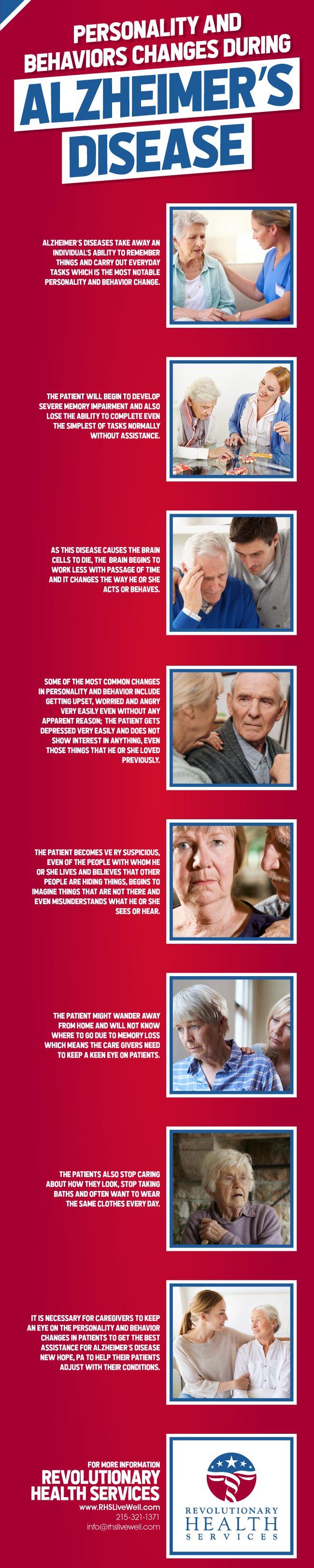
Personality and Behaviors Changes During Alzheimer’s Disease

Alzheimer’s disease is a disorder that progresses with time and causes the brain cells to degenerate and die that leads to various complications. As the disease develops, it results in Dementia Symptoms, a continuous decline in thought process, behavioral and social skills that destroy the patient’s ability to function independently. 

  • Alzheimer’s diseases take away an individual’s ability to remember things and carry out everyday tasks which is the most notable personality and behavior change
  • The patient will begin to develop severe memory impairment and also lose the ability to complete even the simplest of tasks normally without assistance
  • As this disease causes the brain cells to die, the brain begins to work less with passage of time and it changes the way he or she acts or behaves
  • Some of the most common changes in personality and behavior include getting upset, worried and angry very easily even without any apparent reason;  The patient gets depressed very easily and does not show interest in anything, even those things that he or she loved previously
  • the patient becomes very suspicious, even of the people with whom he or she lives and believes that other people are hiding things, begins to imagine things that are not there and even misunderstands what he or she sees or hear
  • The patient might wander away from home and will not know where to go due to memory loss which means the care givers need to keep a keen eye on patients
  • The patients also stop caring about how they look, stop taking baths and often want to wear the same clothes every day
  • It is necessary for caregivers to keep an eye on the personality and behavior changes in patients to get the best assistance for Alzheimer’s disease New Hope, PA to help their patients adjust with their conditions
Personality and Behaviors Changes During Alzheimer’s Disease

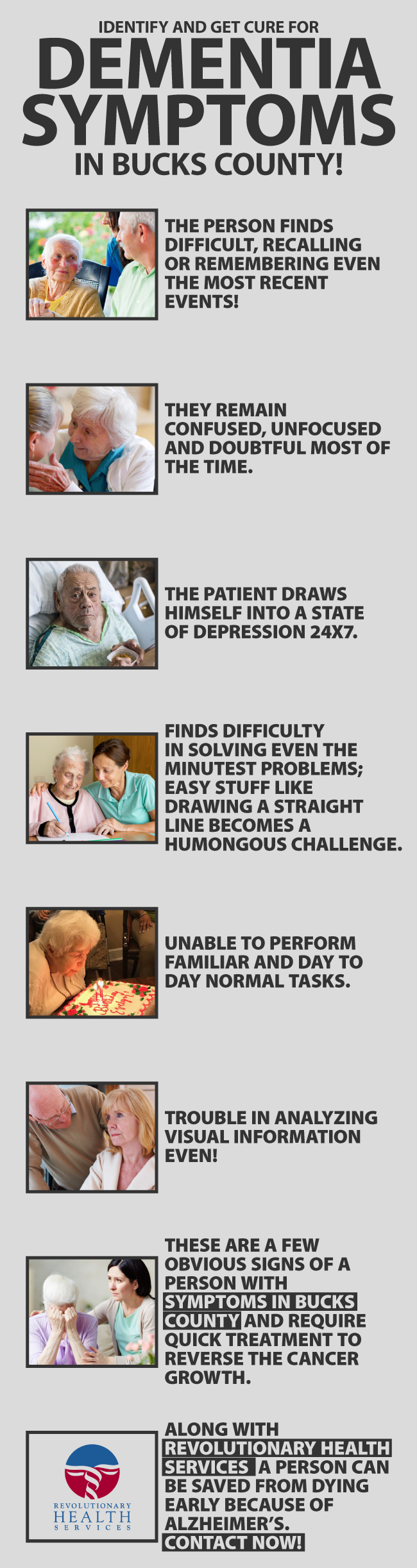
Identify And Get Cure For Dementia Symptoms In Bucks County

Dementia is a cause of Alzheimer’s disease which if isn’t stopped in time can lead to one’s early death. These symptoms may not have immerged all of a sudden but the brain has been nurturing the cancer cells for years and years before symptoms became obvious. Whatever stage the person inflicted with Alzheimer’s, is on, it can be gradually reversed and lead to a path towards cure. So it is very important to take the patient in the care of an internal care physician upon the doubtful feeling of dementia symptoms in Bucks County. Here are a few common symptoms of dementia that need to be put on treatment process upon acknowledgement.

  • The person finds difficult, recalling or remembering even the most recent events
  • They remain confused, unfocused and doubtful most of the time.
  • The patient draws himself into a state of depression 24×7
  • Finds difficulty in solving even the minutest problems; easy stuff like drawing a straight line becomes a humongous challenge.
  • Unable to perform familiar and day to day normal tasks.
  • Trouble in analyzing visual information even
  • These are a few obvious signs of a person with dementia symptoms in Bucks County and require quick treatment to reverse the cancer growth.
  • Along with Revolutionary Health Services, a person can be saved from dying early because of Alzheimer’s. Contact now!

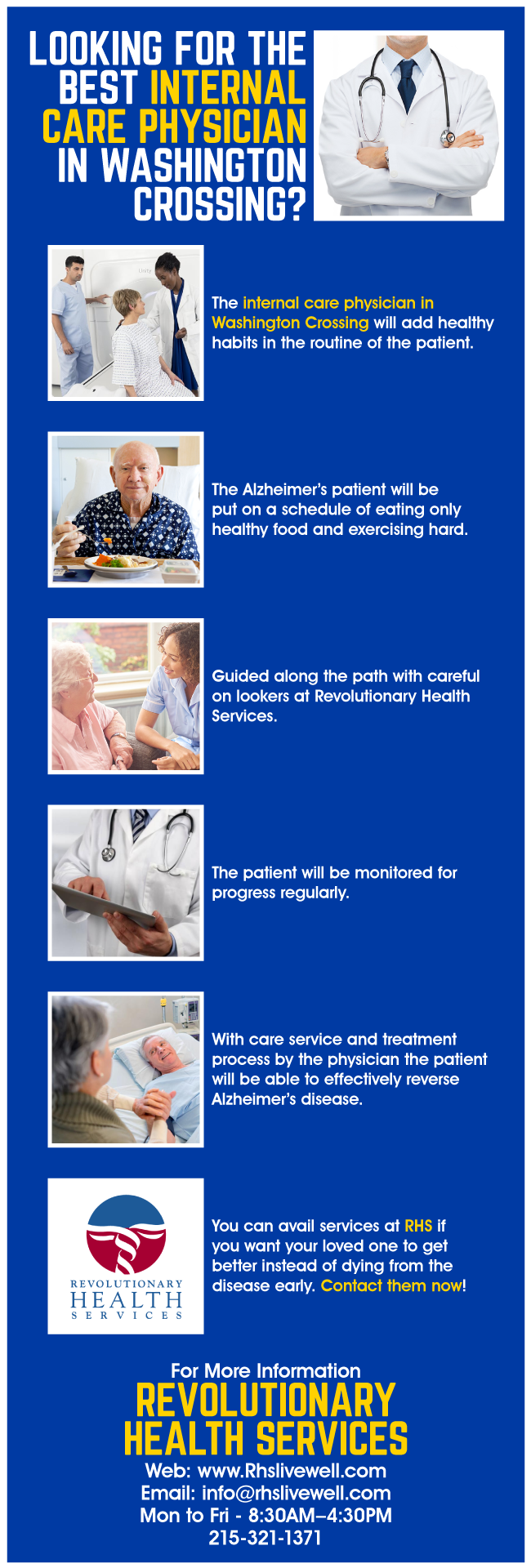
Looking For The Best Internal Care Physician In Washington Crossing?

Alzheimer’s disease is a common problem in people above the age of 65 these days. Statistics state that an estimated 5.5 million people of all ages suffer from Alzheimer’s of which 5.3 million are 65+ in age. This determines that old age can easily bring the disease in full mode and requires adequate care to be given to such people who will be entering the stage of helpless dependency after retirement.

It becomes essential to seek aid of an Internal care Physician in Washington Crossing who will give them the necessary treatment along with love and care. Here are a few ways how

  • The internal care physician in Washington Crossing will add healthy habits in the routine of the patient.
  • The Alzheimer’s patient will be put on a schedule of eating only healthy food and exercising hard.
  • Guided along the path with careful on lookers at Revolutionary Health Services.
  • The patient will be monitored for progress regularly.
  • With care service and treatment process by the physician the patient will be able to effectively reverse Alzheimer’s disease.
  • You can avail services at RHS if you want your loved one to get better instead of dying from the disease early. Contact them now!
Design a site like this with WordPress.com
Get started